Discover Aix en Provence
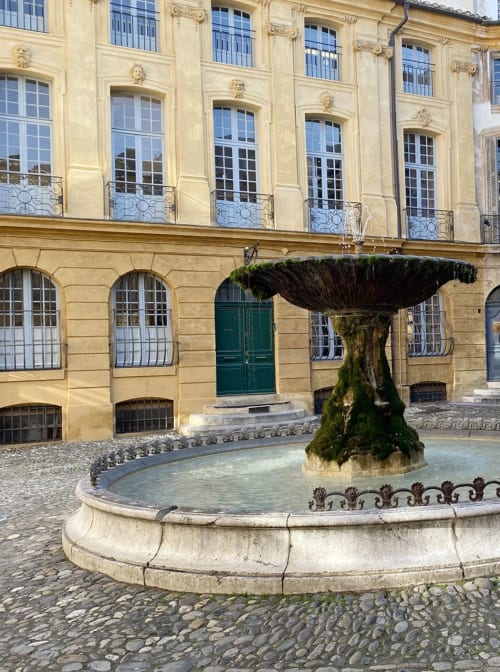
Capital of Provence in the 15th century, Aix-en-Provence shines with its dynamism and cultural heritage. A spa town with bourgeois residences and a hundred fountains, immortalized by Paul Cézanne and his Sainte-Victoire, it seems the archetype of the romantic city, attracting many students from all over the world, lovers of lyrical art, epicureans, hikers and others.
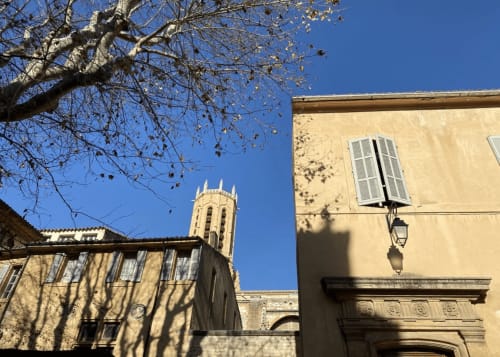
500 meters from the Hôtel Paul.
It combines Romanesque, Gothic, and Baroque art.
Construction began in the 5th century and was completed in the 18th century. The Saint-Sauveur cloister was built around 1190. It is the only Provençal cloister not to be vaulted but covered with a timber frame.
The Hôtel Paul will be happy to provide you with visiting hours for the Cathedral and the cloister.
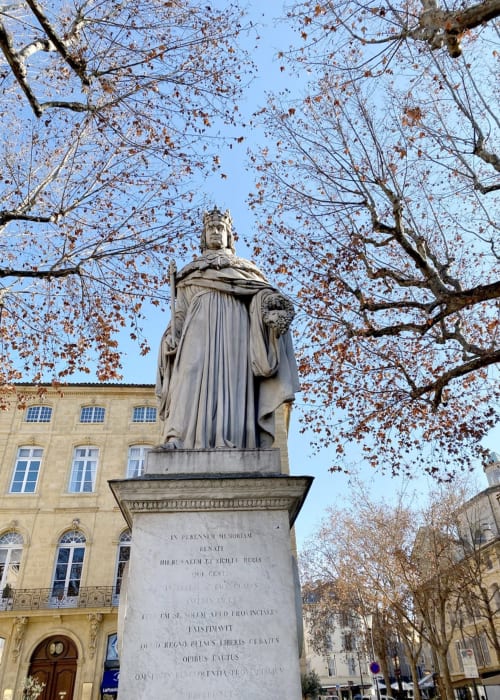
The Cours Mirabeau, with its statue of King René, is the city's central artery, "the imposing spectacle that those who have not seen it will never be able to imagine," according to Aix historian Ambroise Roux-Alphéran.
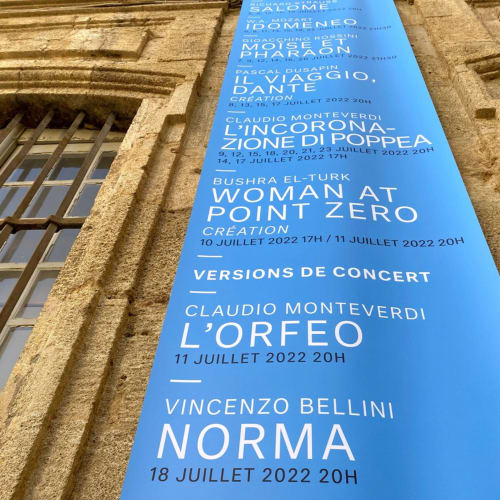
The former Archbishops' Palace, listed in 1942, adjoins the cathedral. This palace houses the Tapestry Museum and has hosted the Aix-en-Provence Lyric Art Festival every summer since 1948, held outdoors at nightfall.
It is one of the largest European opera festivals, with a particular affinity for Mozart's operas.
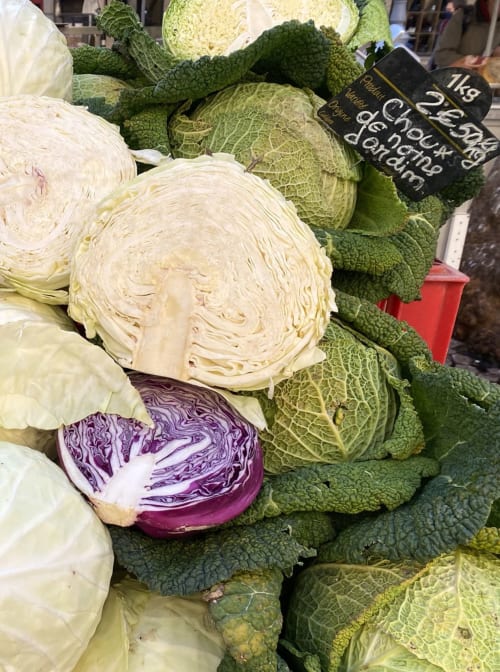
...Since the 14th century!
Provencal market! Vegetables, lavender, spices, regional products, cheeses, and a fish market. Typical and entertaining. Café terraces adjoin the daily seasonal stalls.
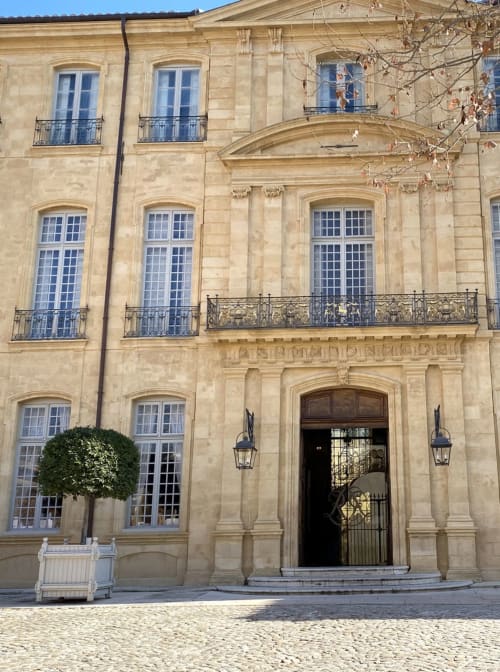
Formerly the Darius Milhaud Conservatory, it now houses an art center, hosting exhibitions around Turner, Chagall, and masterpieces from the Guggenheim...
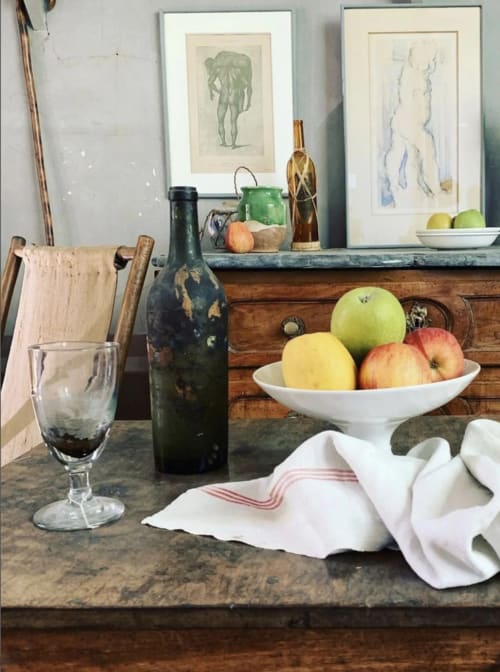
A country house built by Paul Cézanne in 1901, on the Lauves hill, where he painted his last works until his death in 1906. Writings, personal objects, work materials... A moving visit that immerses us in the painter's private life. Reservation required.
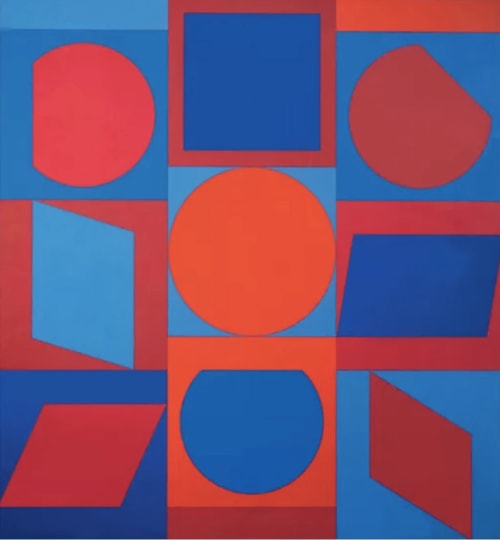
Victor Vasarely, a leading figure in popular art in the 1960s and 1970s, was the inventor of optical art.
The Foundation, comprising 16 hexagons, each 14 meters wide on opposite sides, was inaugurated in 1976 in the presence of Madame Claude Pompidou and Jacques Chirac, then Prime Minister.
These paintings, "you can't fix the image. What you see is different from what you'll see two or three seconds later..."
Michel Gauthier, exhibition curator.
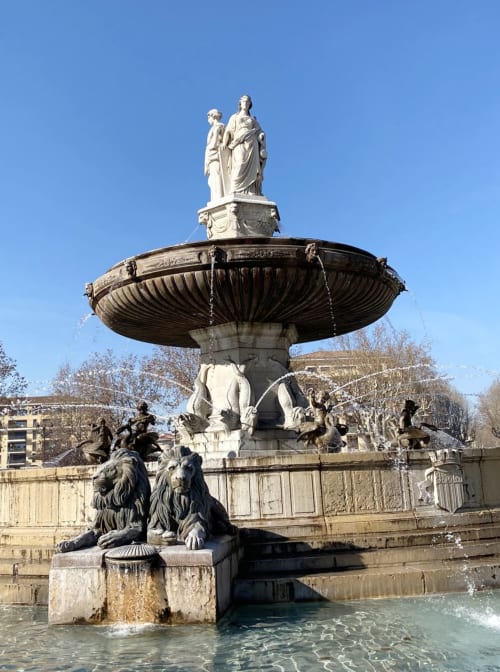
Inaugurated in 1860, the "lion fountain" built from stone from regional quarries is one of the most emblematic monuments of Aix.
Listed as a historic monument since 2000.